Allahabad High Court verdict against Indira Gandhi
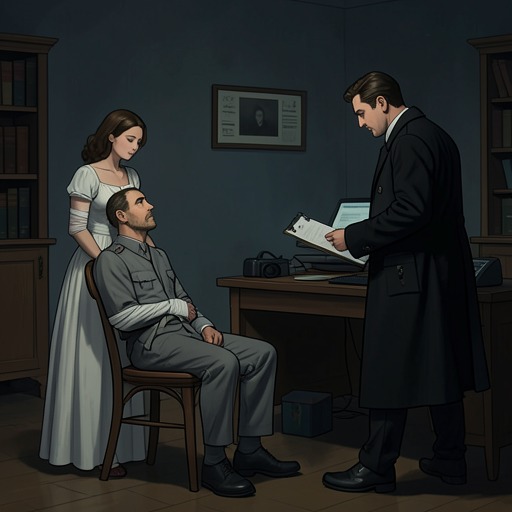
Midnight's ChildrenThe Allahabad High Court verdict against Indira Gandhi is a political judgment and a structural hinge in the novel: at the precise moment the court finds the Prime Minister guilty of election malpractice, Parvati-the-witch becomes certain that her labor has begun. The parallel develops over thirteen days, joining a threatened government and a prolonged childbirth until both reach a midnight of arrest, birth, and emergency rule.
The verdict and its immediate stakes
The narrator identifies June 12 as the day the history books, newspapers, and radio report that Indira Gandhi was found guilty by Judge Jag Mohan Lai Sinha of the Allahabad High Court. The judgment concerned two counts of campaign malpractice during the 1971 election campaign. In the narration, its importance is both legal and political: Gandhi’s convictions carried a mandatory penalty barring her from public office for six years, and she refuses to resign as the consequences unfold.
A political crisis mirrored by labor
Saleem locates the verdict within a precise personal parallel. At two in the afternoon, when the court delivers its judgment, Parvati-the-witch, now Laylah Sinai, becomes sure she has entered labor. Her childbirth then provides the narrative’s counterpoint to the political crisis: the court’s decision and the contractions begin together, but neither process resolves quickly.
On the first day, Parvati’s cervix does not dilate despite severe contractions. Saleem and Picture Singh cannot enter the hut where she is suffering; the contortionist triplets have taken on the duties of midwives. Outside, performers arrive, slap the two men on the back, and make dirty jokes, while Saleem hears the countdown in his mind and fears that the child will bring disaster. Picture Singh answers with confidence that the baby will be a ten-chip whopper. Their exchange places Saleem’s foreboding beside the reassuring language of expectation, without resolving the danger.
The political developments continue to run alongside the labor. On the second day, Mrs. Gandhi refuses to resign even as the judgment’s penalty bars her from public office; that day, her electoral candidates are routed in Gujarat by the Janata Morcha. Saleem, terrified that Parvati may die, refuses food until the baby is born or something else happens. The story thus makes the wait itself consequential: the private vigil is measured against an accelerating public challenge to the Prime Minister.
The thirteen-day countdown
By the ninth day, the ghetto has fallen into a profound hush. Saleem cannot hear the demonstrations outside Rashtrapati Bhavan or Morarji Desai’s call for President Ahmad to dismiss the disgraced Prime Minister. The silence, which echoes an earlier silence in Saleem’s family history, leaves Parvati’s labor and Saleem’s inward ticktock as the audible center of the episode. Political events remain in motion beyond the hut, but the narrative makes them seem temporarily screened from view.
On the twelfth day, the Supreme Court tells Mrs. Gandhi that she need not resign while her appeal is pending, though she may neither vote in the Lok Sabha nor draw a salary. Her partial reprieve coincides with Parvati’s exhaustion and with the triplets’ fear that she will die if the baby does not come soon. The two crises therefore do not mirror each other as identical outcomes: Gandhi receives a limited legal concession, while Parvati’s condition grows more precarious.
On the thirteenth day, the triplets return to Parvati’s bedside and announce that she has begun to push. Outside, J. P. Narayan and Morarji Desai urge the police and Army to disobey orders they consider illegal from the disqualified Prime Minister. The narration aligns their political appeal with the midwives’ commands, so that pressure to act gathers on both sides of the story. The comparison links political and bodily struggle without claiming that either causes the other.
Midnight, birth, and the Emergency
As the night moves toward midnight, Parvati gives birth to Saleem’s son. After thirteen days of labor, the birth comes with surprising ease, despite the prolonged fear and hardship that precede it. At the same moment, the Central Reserve Police arrest leaders of the Janata Morcha, including Morarji Desai and J. P. Narayan. The private arrival and the state’s arrests converge in the narration’s chosen hour, making midnight the shared frame for a child’s beginning and political repression.
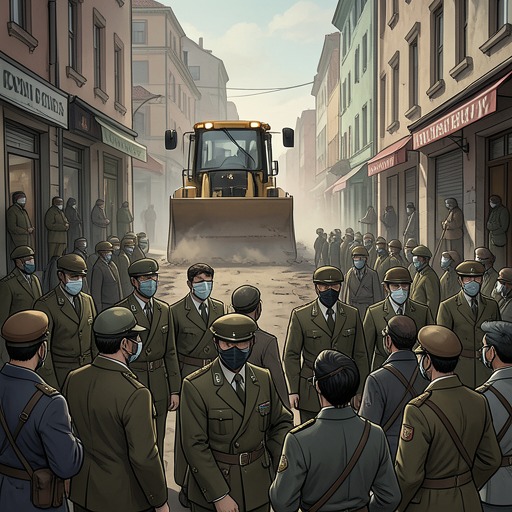
When the midwives bring the washed and sari-wrapped baby to Saleem, the word Emergency is being heard for the first time. The announcement is accompanied by the suspension of civil rights, censorship of the press, special alert for armored units, and arrests of people identified as subversive. Saleem calls this both an ending and a birth: the new India begins a continuous midnight that lasts two years, while Aadam Sinai enters the world as the child of that renewed ticktock. The verdict’s narrative consequence is therefore not merely the plot’s reference to a court case; it is the opening marker in a sequence whose climax binds the labor, the political crackdown, and Aadam’s birth.
Narrative construction and significance
Saleem explicitly distinguishes the documented public event from what, he says, has not been revealed before: Parvati’s labor began at precisely the time of the verdict. The juxtaposition turns chronology into a pattern. Judicial judgment, electoral opposition, childbirth, arrest, and the Emergency are not presented as interchangeable events, but the narrator’s timing makes them resonate as simultaneous pressures converging at midnight.
The episode also exemplifies the retrospective narrator’s power to shape historical material. He supplies exact times and public developments, then places the private labor within the same timetable, where Saleem’s hunger, fear, and remembered ticktock govern the reader’s experience of waiting. The verdict matters both as political history and as a clock-setting event in Saleem’s family story: its date begins the thirteen-day passage that ends with Aadam’s birth and the suspension of ordinary civic life.